
Import Duty in Kenya: What Every Trader Needs to Know Before Shipping
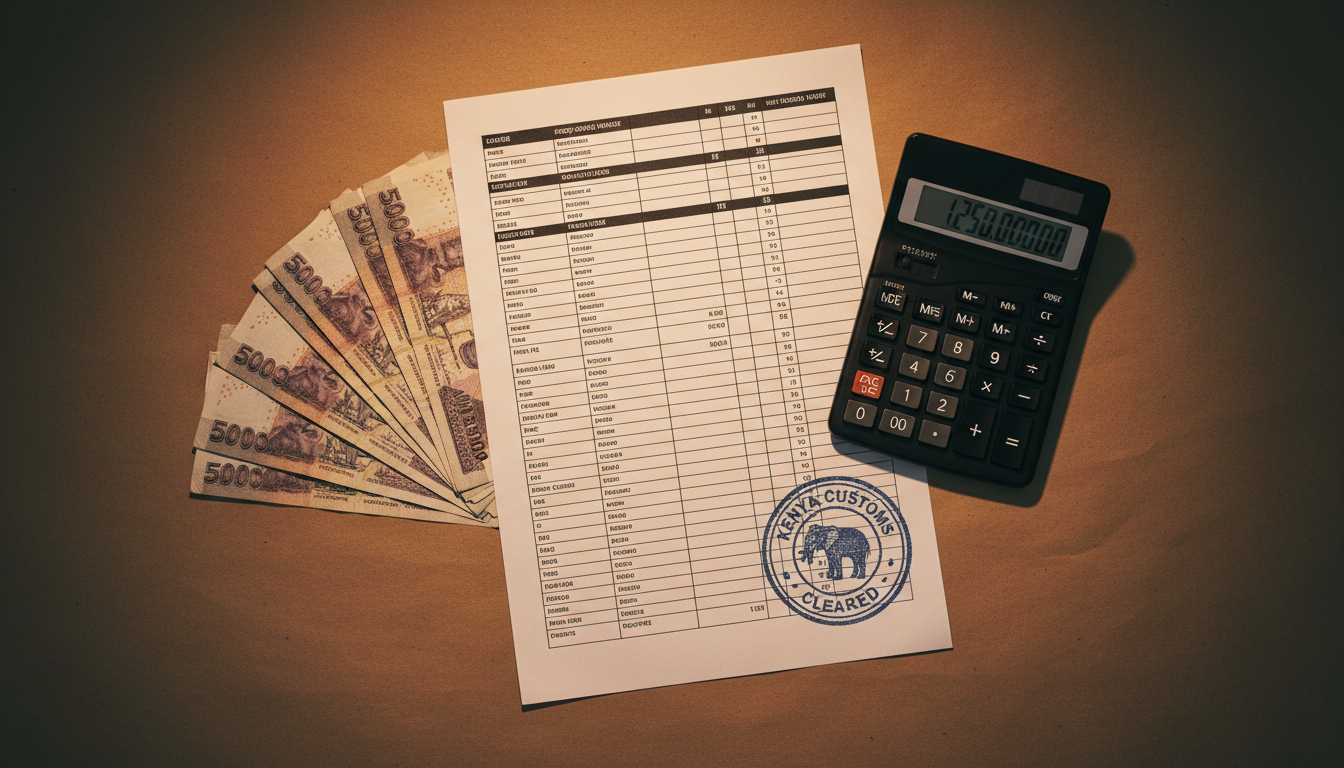
A Nairobi importer orders KES 800,000 worth of electronics from Shenzhen. The supplier quotes clean. The freight forwarder quotes clean. Then the KRA assessment comes back and the actual landed cost is KES 1.3 million. No fraud, no error — just every levy the trader didn’t account for stacking up at the port of Mombasa.
This happens every week. It happens because most traders calculate import duty in Kenya using the invoice value alone, which is not how KRA calculates it. Here is exactly how it works.
How KRA Actually Calculates What You Owe
Kenya’s customs duty is not based on your supplier invoice. It is based on the CIF value — Cost + Insurance + Freight — converted to Kenya Shillings at the KRA exchange rate on the date of entry. That rate is published weekly and is almost always different from the CBK rate or whatever your bank quoted you.
Need a Freelancer for This?
Hire verified talent on Fiverr — starting from $5. No contracts, no hassle.
Browse Fiverr Freelancers →Every charge that follows is calculated as a percentage of that CIF figure. Get the CIF wrong and every number downstream is wrong. If your freight forwarder is quoting you duty off the FOB invoice value, find a new freight forwarder.
→ Use the free Import Duty & Landed Cost Calculator at MetricSuite.tools to run your CIF-based estimate instantly — no signup required.
The Five Charges That Build Your Landed Cost
Most traders know about import duty. They miss the other four. Here is the full stack:
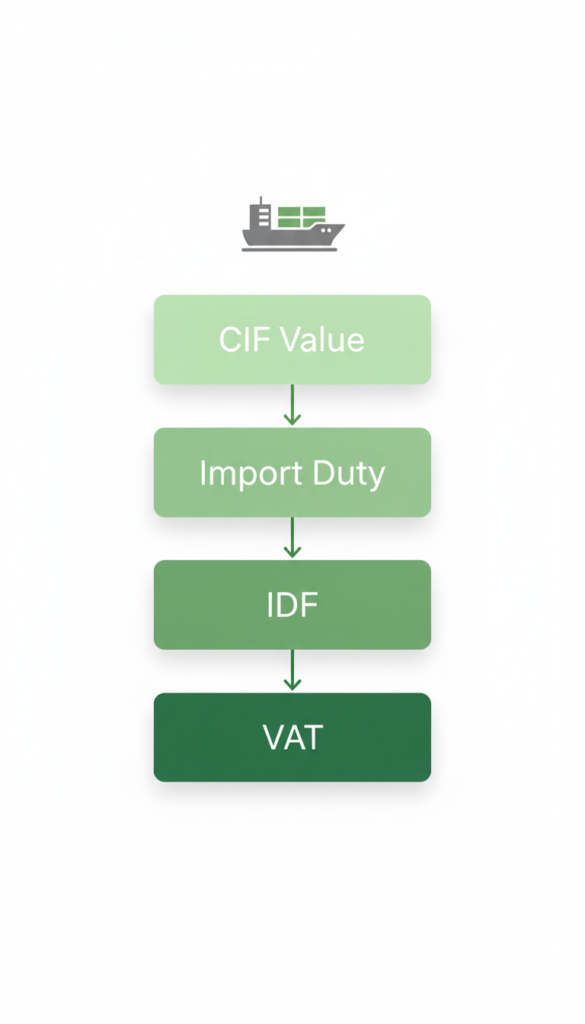
1. Import Duty Rates are set in Kenya’s East African Community Common External Tariff (EAC-CET) and range from 0% to 35% depending on HS code. Consumer electronics typically attract 25%. Raw materials for local manufacturing often get 0% or 10%. The rate is tied entirely to the HS code — not your description of the goods.
2. Import Declaration Fee (IDF) Flat 3.5% of CIF value, with a minimum of KES 5,000. This is non-negotiable and applies to virtually all commercial imports. Many traders forget this entirely.
3. Railway Development Levy (RDL) 1.5% of CIF value. Introduced to fund SGR infrastructure. Small percentage, real money on large shipments.
4. Value Added Tax (VAT) 16% — but applied to a compounded base: CIF + Import Duty + IDF + RDL. This compounding is where most traders get caught. You are not paying 16% of your goods value. You are paying 16% of an already-inflated customs value.
5. Excise Duty Not universal, but if your goods fall into excisable categories — alcohol, tobacco, cosmetics, fuel, certain electronics — add this on top. Rates vary by product and are set in the Excise Duty Act.
A Real Calculation: Chinese Textile Shipment to Nairobi
Let’s make this concrete. You’re importing fabric from Guangzhou:
- FOB value: USD 10,000
- Freight: USD 1,200
- Insurance: USD 80
- CIF total: USD 11,280
- KRA exchange rate: 1 USD = KES 133
- CIF in KES: KES 1,500,240
Now apply the levies (fabric typically attracts 25% import duty):
| Charge | Rate | Amount (KES) |
|---|---|---|
| Import Duty | 25% of CIF | 375,060 |
| IDF | 3.5% of CIF | 52,508 |
| RDL | 1.5% of CIF | 22,504 |
| VAT Base | CIF + above | 1,950,312 |
| VAT | 16% of above | 312,050 |
| Total Tax Bill | 762,122 | |
| Landed Cost | 2,262,362 |
You quoted your customer off a USD 10,000 invoice. Your actual landed cost before local transport, storage, or clearing agent fees is KES 2.26 million. That margin compression is not a surprise — it’s a calculation failure.
→ Use the free African Multi-Currency Pricing Calculator at MetricSuite.tools to build your sell price off actual landed cost, not supplier invoice.
HS Codes: The Number That Controls Everything
Every import duty rate in Kenya is determined by the Harmonised System (HS) code assigned to your goods. The same physical product can attract wildly different duty rates depending on how it’s classified.
A practical example: a portable solar lantern might be classified as a lighting device (HS 9405) at 25% duty or as solar energy equipment (HS 8541) at 0% — depending on its primary function and how the entry is filed. KRA classifiers make this determination, but importers who understand HS codes can engage meaningfully with the process and, where legitimate, request reclassification.
Do not let your clearing agent assign HS codes without your involvement. Wrong codes mean either overpayment or, worse, a penalty for misdeclaration. Check the EAC-CET schedule directly or use a licensed customs agent who will show you the tariff reference, not just quote you a number.
Pre-Shipment vs Post-Shipment: When to Get Your Numbers
The single most expensive mistake Kenyan importers make is calculating duty after the goods have already shipped. At that point you have no leverage — not on the supplier price, not on the freight terms, not on the HS code strategy.
Your landed cost calculation should happen before you issue the purchase order. That means:
- Confirm the HS code before ordering
- Get freight quotes in writing and include them in your CIF
- Check the KRA weekly exchange rate and apply a buffer (use the rate from the most recent Friday publication plus 2-3%)
- Build in clearing agent fees (typically KES 15,000–35,000 for a standard consignment) and port charges separately
By the time goods arrive at Mombasa or JKIA, your numbers should already be settled. The customs bill should be a confirmation, not a discovery.
Common Mistakes That Cost Kenyan Importers Money
- Using the bank rate instead of KRA rate — can swing your duty calculation by 5-8% depending on timing
- Forgetting IDF and RDL — together they add 5% before VAT even enters the picture
- Accepting supplier HS code suggestions — some suppliers code goods to reduce their export paperwork, not to reflect Kenyan import classification
- Not accounting for VAT compounding — every trader who’s done this calculation correctly the first time is shocked by how much larger VAT is than expected
- Ignoring excise duty categories — cosmetics, certain electronics, and flavoured products often attract excise that clearing agents quote separately and late
Need a hand with your trade operations?
Find vetted African business & finance freelancers on Fiverr
From customs clearing consultants to bookkeepers who understand cross-border trade — hire talent that knows African market realities.
Browse Finance & Business Freelancers →Conclusion: Calculate Before You Commit
Import duty in Kenya is predictable. It is not arbitrary, and it is not a surprise — provided you run the numbers correctly before committing to a supplier price or a customer quote.
The formula is CIF-based. The stack is five layers deep. The HS code controls the rate. And the KRA exchange rate, not your bank’s, is what matters.
Run your full landed cost calculation before every purchase order, not after. Traders who do this consistently protect their margins. Those who don’t are perpetually adjusting prices after the fact and wondering why the business isn’t profitable.
Key Takeaways
- Import duty in Kenya is calculated on CIF value (Cost + Insurance + Freight), not the supplier invoice
- Five charges stack up: Import Duty, IDF (3.5%), RDL (1.5%), VAT (16% on compounded base), and Excise where applicable
- The HS code determines your duty rate — confirm it before ordering, not after arrival
- Use the KRA weekly exchange rate, not your bank rate, for accurate KES conversion
- Calculate landed cost before issuing a purchase order — that is the only point where you still have options