
How to Pass Stripe Fees to Clients (and Keep 100% of Your Revenue)
You close a $1,000 freelance contract. The client pays via credit card. You check your bank account, and you only received $967.
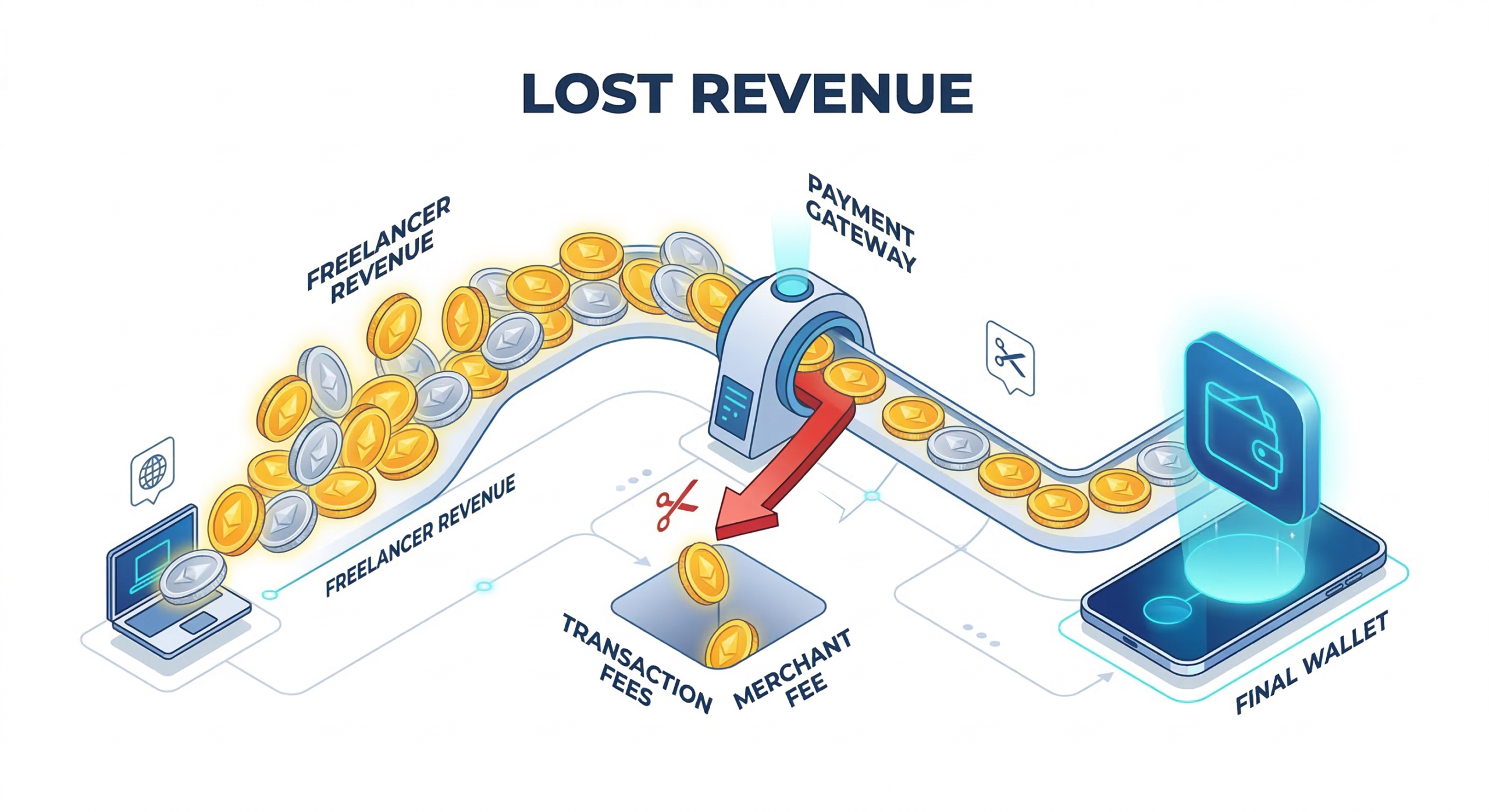
Payment gateway deductions are a quiet tax on your business. If you do not know exactly how to pass Stripe fees to clients, you are subsidizing their payment convenience out of your own profit margin. Over a year, those 3% deductions can cost you thousands of dollars in lost revenue.
Here is the exact math to reverse-engineer your invoices so you get paid what you actually billed.
Need a Freelancer for This?
Hire verified talent on Fiverr — starting from $5. No contracts, no hassle.
Browse Fiverr Freelancers →The Math Behind Payment Gateway Fees
Stripe and PayPal do not take a simple flat rate. They take a percentage plus a fixed fee. The standard Stripe rate for invoicing is 2.9% + $0.30 per transaction. PayPal is often 3.49% + $0.49.
Most freelancers make a critical math error here. If you just add 2.9% to a $1,000 invoice ($1,029), Stripe takes 2.9% of that new higher number. You still end up short. You must use a reverse-engineering formula to calculate the true gross amount.

- The flawed method: Adding 2.9% directly to your net target.
- The correct method: Dividing your target amount by the remaining percentage.
- The risk: Doing this complex math manually for every invoice wastes time and invites accounting errors.
Calculate Your Exact Markup Instantly
Stop doing algebra every time you send a bill. Use the MetricSuite Payment Gateway Fee Calculator to get the exact gross number in seconds. It is free, runs entirely in your browser, and requires no sign-up.
Here is how to use it:
- Set your goal: Select “Reverse (How much to bill clients).”
- Pick your gateway: Choose Stripe, PayPal, or enter custom international rates.
- Enter your target: Type in the exact amount you need to receive in your bank account.
Calculate Your Exact Fees Here
3 Rules for Passing Fees Legally and Professionally
You cannot just sneak hidden fees onto a final invoice. It ruins client trust and violates merchant agreements in certain jurisdictions. Follow these standard business protocols:
1. Put it in your contract. State clearly in your initial proposal and contract that credit card payments incur a processing convenience fee. No client should be surprised by a line item.
2. Offer a free alternative. Always give clients a way to pay without fees. Offer ACH bank transfers, direct wire, or international routing options like Wise. If they choose the credit card for their own convenience or reward points, they accept the fee.
3. Itemize the charge. Do not artificially inflate your hourly rate or flat fee to hide the deduction. Add a specific, transparent line item on your invoice labeled “Credit Card Processing Fee.”
Protect Your Profit Margins
Every dollar lost to a payment gateway is a dollar taken directly from your bottom line. Standardize your billing process today.
Get your exact numbers using the Payment Gateway Fee Calculator, then generate a clean, professional bill using our Free Invoice Generator.