
Generator vs Grid: What Power Really Costs Nigerian Business
Power is the lifeblood of any business, but in Nigeria, it’s also one of the biggest drains on your bottom line. Whether you rely on the national grid or run your own generator, the true cost of powering your business is often hidden in plain sight. For Nigerian entrepreneurs, freelancers, and cross-border traders, understanding these costs is not just about budgeting; it’s about survival and competitiveness.
The Nigerian Power Reality: Grid or Generator?
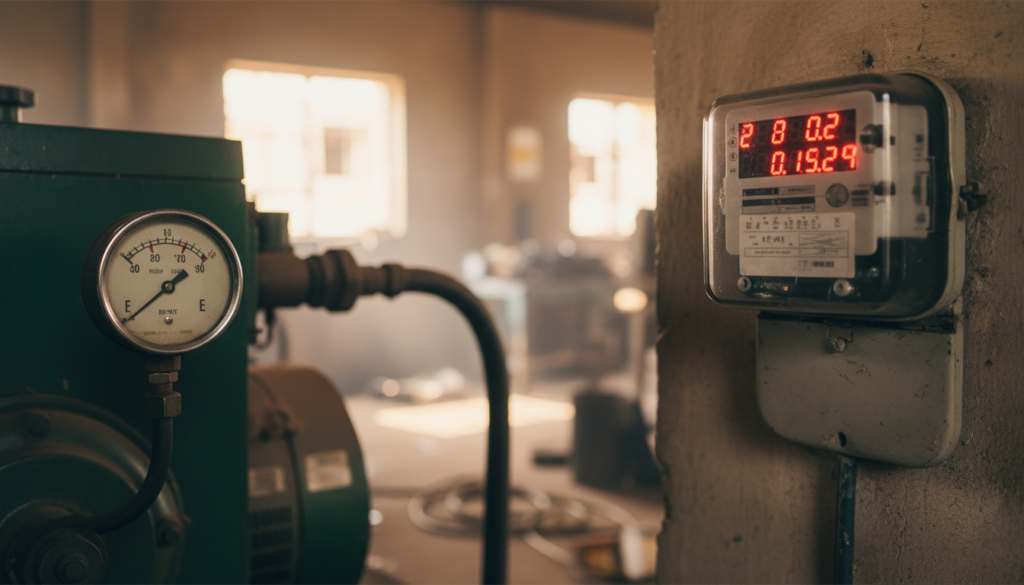
Nigeria’s national grid is notoriously unreliable. Frequent outages, voltage fluctuations, and erratic billing plague businesses across Lagos, Abuja, Port Harcourt, and beyond. Following recent Nigerian Electricity Regulatory Commission (NERC) tariff hikes, average grid electricity for Band A customers (which includes most commercial hubs) has jumped to over NGN 200 to NGN 225 per kWh. While lower bands are cheaper, they often receive practically zero power.
Generators fill the gap, but the financial burden is heavy. Diesel (AGO) and Petrol (PMS) prices fluctuate wildly. Diesel frequently sits well above NGN 1,100 to NGN 1,400+ per litre, while petrol costs shift depending on scarcity and subsidies. Running a generator for 8 hours a day can easily consume 5 to 10 litres daily, translating to NGN 5,000 to NGN 14,000+ in fuel costs alone, before factoring in the heavy toll of maintenance, oil, and depreciation.
Need a Freelancer for This?
Hire verified talent on Fiverr — starting from $5. No contracts, no hassle.
Browse Fiverr Freelancers →Breaking Down the Costs: What You’re Really Paying
1. Grid Electricity Costs
- Tariffs: ~NGN 200–225 per kWh for commercial Band A customers.
- Hidden Costs: Unpaid bills, meter issues, and surcharges can add an unexpected 10–20% to your baseline costs.
- Downtime: Power outages mean lost productivity, estimated at 5–10% revenue loss monthly for many SMEs.
2. Generator Costs
- Fuel: NGN 1,100–1,400+ per litre for diesel; fluctuating high costs for petrol.
- Consumption: 0.4 to 0.8 litres per kWh generated, depending on engine efficiency and load.
- Maintenance: Regular servicing, replacement parts, and the frequent cost of heavy-duty lubricants (generator oil) can add NGN 15,000–30,000 monthly.
- Indirect Costs: Noise pollution, health impacts, and potential regulatory fines in strict urban zones.
→ Tool: Use the free Generator vs Grid Power Cost Calculator at MetricSuite.tools to calculate your exact localized power costs instantly. No signup required.
Why Nigerian Businesses Lean on Generators Despite the Cost
The grid’s unreliability forces many businesses to run generators as a primary power source. For cross-border traders and freelancers working from home or small offices, uninterrupted power is critical to meet deadlines and keep digital payment platforms like Flutterwave, Paystack, or MTN MoMo running smoothly.
But the cost is steep. Many businesses underestimate how much they spend on fuel, oil, and mechanic visits, often treating generator expenses as “just part of doing business.” This mindset silently erodes profit margins.
Practical Steps to Manage and Reduce Power Costs
1. Shift to Solar and Inverter Systems The dominant survival strategy for Nigerian SMEs is shifting to solar/inverter setups to entirely eliminate daytime generator runs. Treat this as a primary capital expenditure that immediately slashes your daily operational fuel costs.
2. Implement Hybrid Power Strategies Maximize grid power when available, reserve the inverter battery for primary backup, and switch to generators only during extended outages or heavy-load requirements.
3. Fuel Efficiency and Strict Maintenance Regularly service your generator to optimize fuel consumption. Never skip an oil change, use quality fuel, and avoid overloading the engine, which spikes fuel burn rates.
4. Leverage Technology to Protect Your Margins Once you know your true power costs, you must pass those costs on without pricing yourself out of the market.
- Step 1: Use the free Generator vs Grid Power Cost Calculator at MetricSuite.tools to model your operational expenses.
- Step 2: Plug those baseline costs into the free African Multi-Currency Pricing Calculator at MetricSuite.tools to adjust your margins and set profitable prices across different African regions and currencies.
Regulatory and Market Trends to Watch
Nigeria’s power sector is evolving. The introduction of prepaid meters, deregulation of tariffs, and increased private sector participation aim to improve transparency, but they also mean your costs will fluctuate.
Entrepreneurs must stay informed about tariff adjustments by NERC and petroleum pricing dynamics monitored by the Nigerian Midstream and Downstream Petroleum Regulatory Authority (NMDPRA). Understanding these shifts allows you to anticipate cost spikes and adapt your business model accordingly.
Conclusion: Take Control of Your Power Costs Now
Power costs in Nigeria are complex but manageable. Don’t let unreliable electricity and expensive generator runs silently drain your profits. Use data-driven tools, adopt solar-hybrid power solutions, and stay on top of regulatory changes to keep your business competitive.
Your next step: Run your numbers through the Generator vs Grid Power Cost Calculator at MetricSuite.tools today, and stop guessing what your power actually costs.
Key Takeaways
- Commercial grid electricity (Band A) costs upwards of NGN 200–225 per kWh, making reliable power expensive.
- Generators carry heavy hidden costs beyond fuel, particularly in heavy-duty lubricants and constant maintenance.
- Investing in solar/inverter systems is the most effective way to eliminate daily generator fuel expenditure.
- Use MetricSuite’s free calculators to track overhead and adjust your multi-currency pricing to protect your profit margins.
- Monitor regulations from NERC and NMDPRA to anticipate shifts in grid tariffs and fuel costs.